Storm Damage
Windstorm Tree Damage Restoration in Hensley, Arkansas
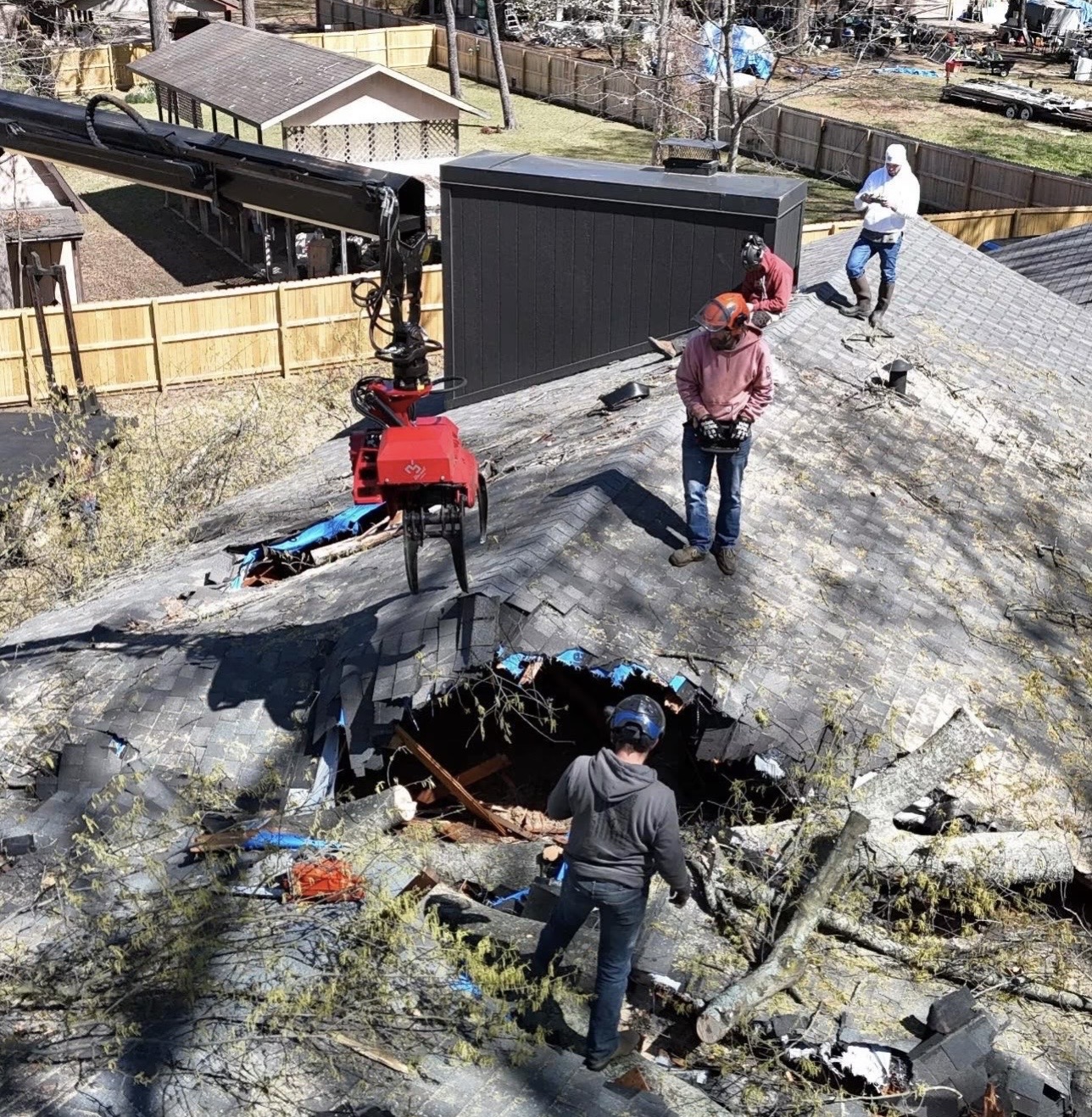
When a windstorm brought a tree down onto a home in Hensley, Arkansas, the damage reached well beyond the spot where the tree struck the roof. A tree contractor involved in the response recommended Legacy Homes Roofing & Restoration to the homeowner for the building repairs. Owner Micah Wilson brought a decade of experience as a catastrophe insurance adjuster to the inspection and construction planning. What followed was a coordinated restoration project covering roof structure, roofing, exterior components, and interior damage.
Looking beyond the visible roof damage
A fallen tree can affect several connected parts of a house. An inspection has to consider the roof covering, the framing and decking beneath it, nearby gutters and fascia, and any interior areas affected by water. For this Hensley home, the documented scope included damaged roof framing and sheathing, roofing materials, gutters and downspouts, aluminum fascia, patio soffit, insulation, drywall, and interior finishes.
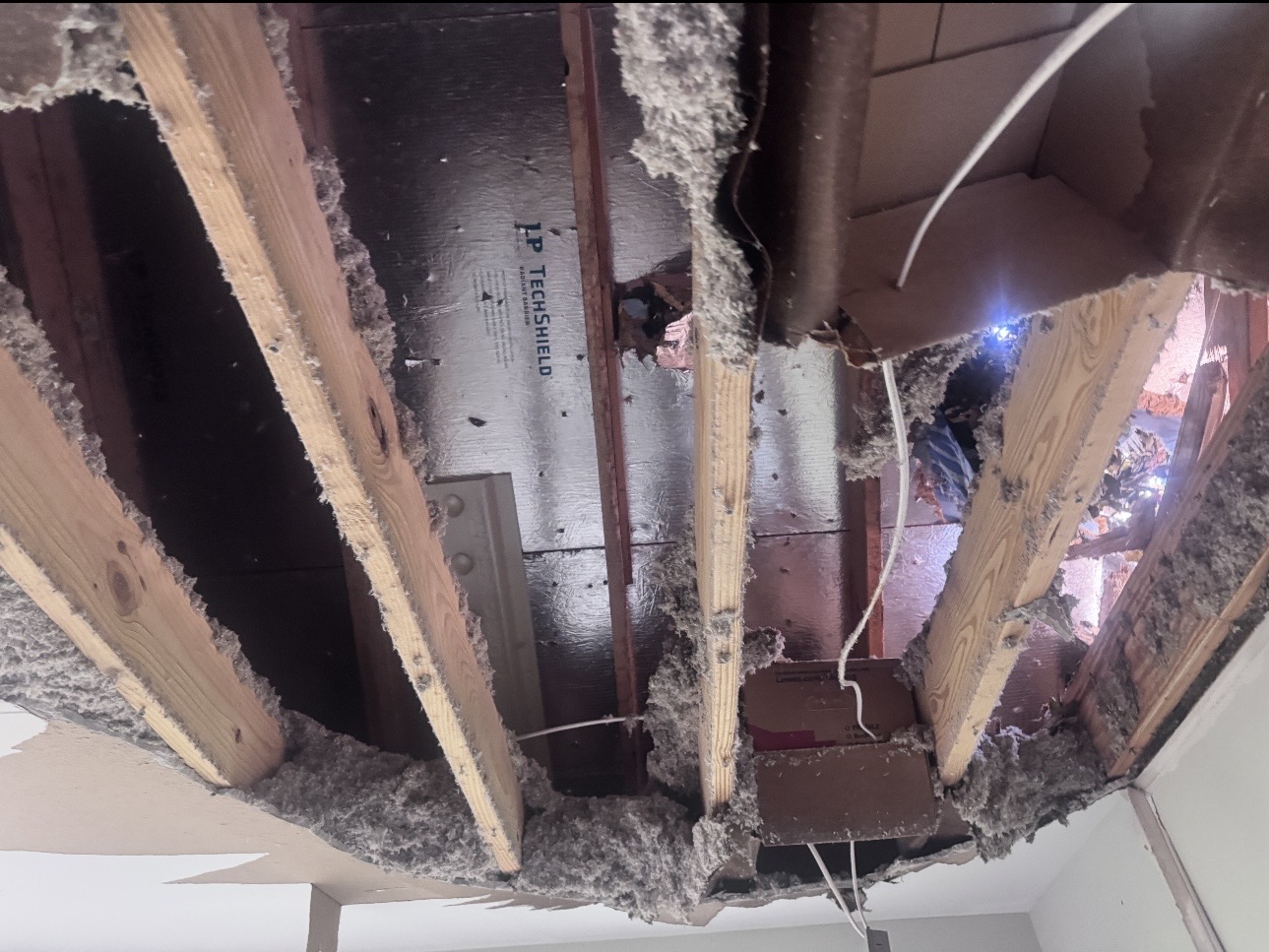
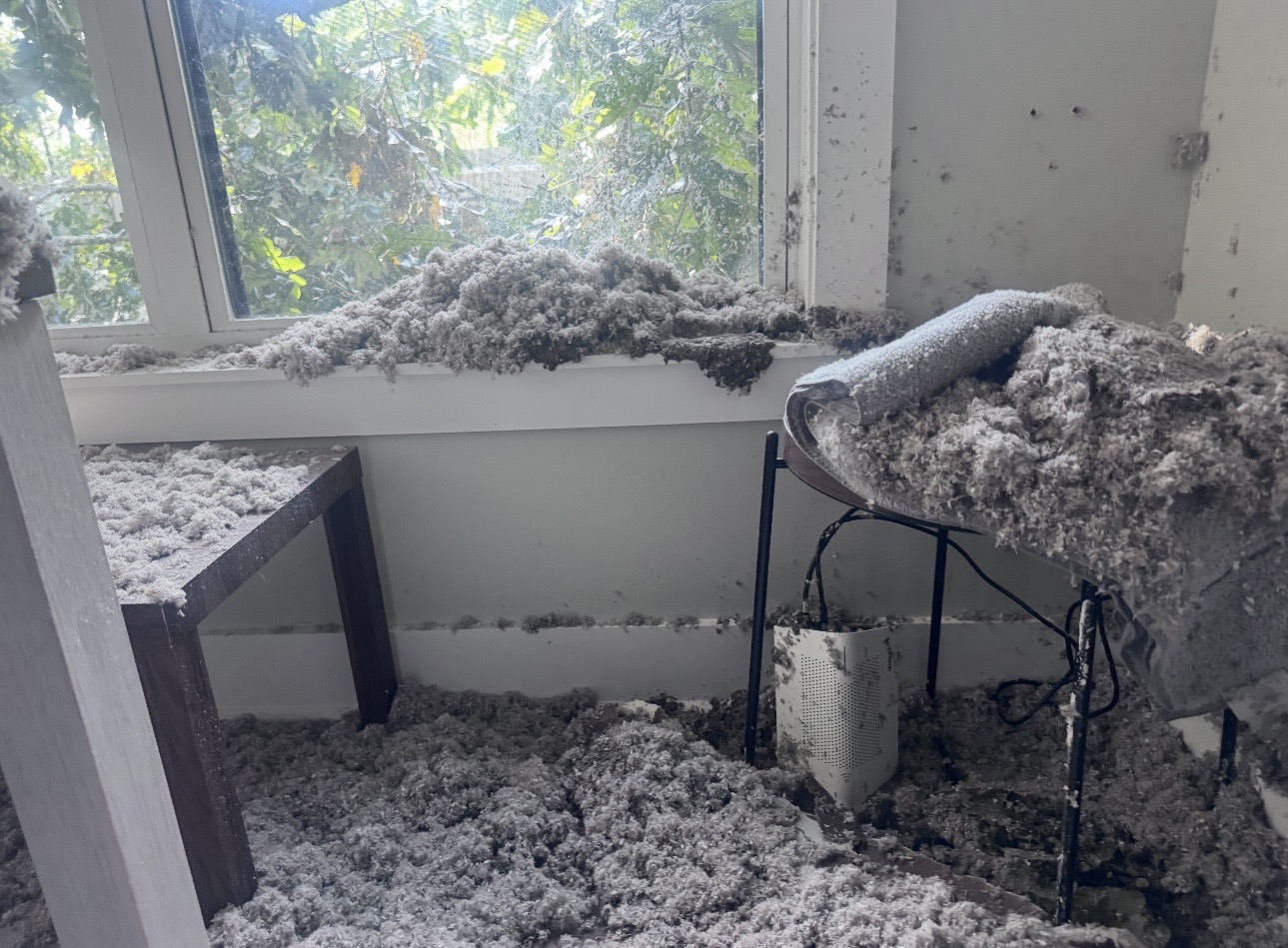
Our role began with an inspection and a detailed repair estimate. We met with the insurance adjuster, compared the proposed scope with the damage and the work needed, and provided documentation for further review. After the scope was reviewed, Allstate's written replacement-cost estimate rose from $19,537.02 on September 2 to $32,850.34 on September 5 — an increase of $13,313.32. The estimate's projected net claim after depreciation and deductible increased by $13,233.94. Those figures describe the insurer's revised estimate, not a verified amount of additional money disbursed. The revised scope included changes to tree-removal allowances and contractor overhead and profit as well as building repairs. The insurer made its own coverage and payment decisions; our role was to document the physical work and help the homeowner understand the proposed repairs.
Why a thorough inspection and a compatible estimate matter
A storm claim starts with an assessment of damage, but the first estimate does not always capture every repair needed to put a home back together. A capable restoration contractor looks past the obvious opening in the roof and documents how the impact affected connected materials and spaces. On this job, that meant accounting for roof framing and decking, exterior details, and interior repairs rather than treating the roof covering as the whole project.

Micah brings a decade of experience as a catastrophe insurance adjuster to his work at Legacy Homes. He knows how to document a construction scope in terms an adjuster can review: measurements, photos, material quantities, labor, and clearly described repair items. We can prepare itemized repair estimates in Xactimate, a platform commonly used by property insurance adjusters and used for the insurer’s estimate on this claim. When a contractor and adjuster use the same platform, it is easier to compare the proposed work, identify differences, and review supporting documentation. It can make the handoff more straightforward and reduce avoidable back-and-forth; it does not guarantee that an insurer will approve every item or pay a particular amount.
We met with the adjuster to discuss the physical repairs and submitted our construction documentation for the carrier's review. The insurer determined the revised claim scope and payment figures. The homeowner then chose Legacy Homes to complete the repairs.
Repairing the structure and the home
Once the work was authorized, the project moved from inspection and estimating to reconstruction. The completion records show work on the roof framing and new decking, followed by roof installation. The installed roof covering was CertainTeed Landmark Pro in Moire Black, documented on the installation certificate as a Class 3 impact-resistant product. Installation photos show the underlayment and shingles being placed on the affected roof slopes.
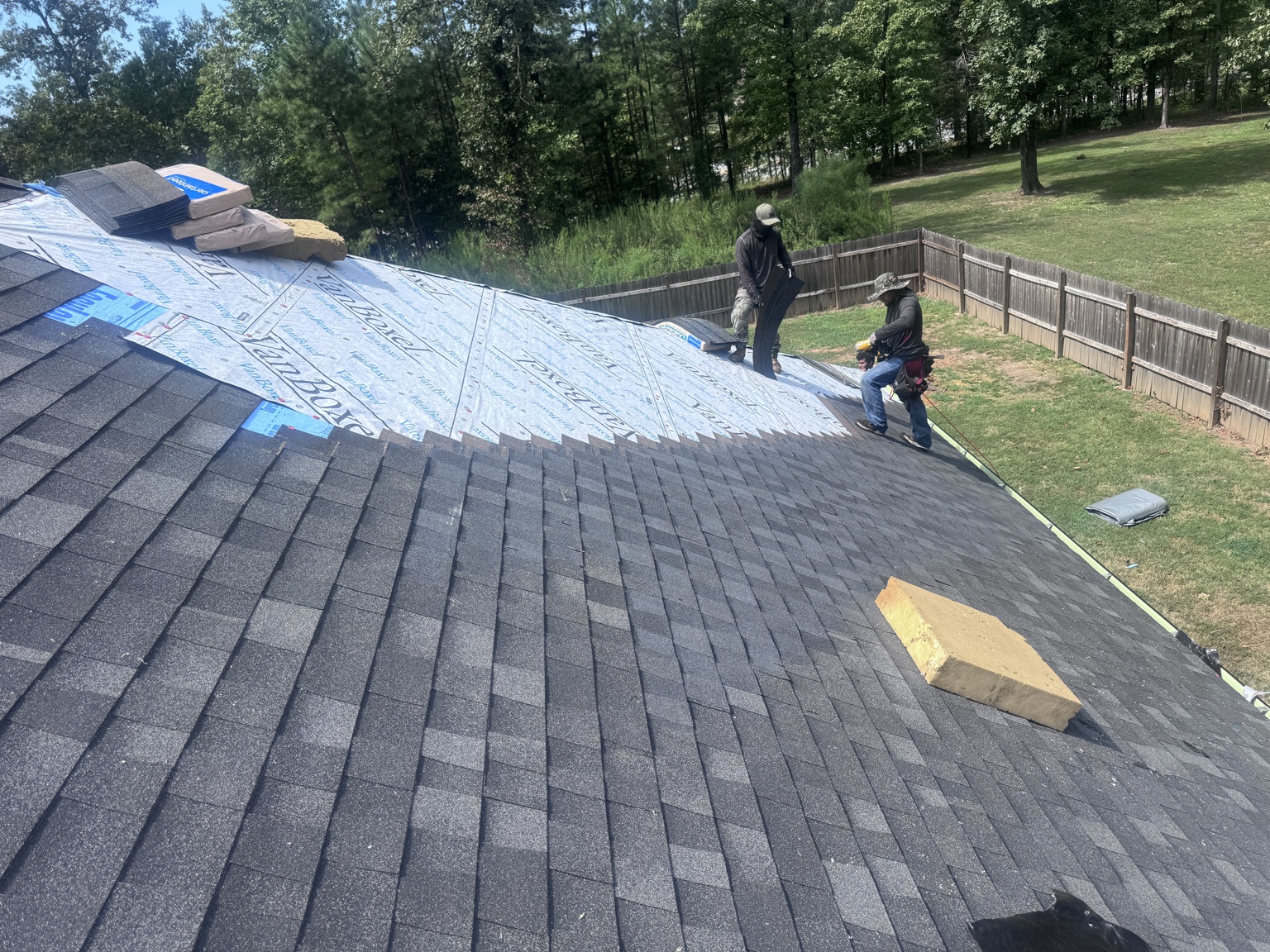
The exterior work also included new gutters and aluminum components and attention to the patio soffit. Inside the home, the photo record documents moisture checks and drywall repairs. These details matter on a tree-impact job: finishing the shingles alone would not address damaged structure or restore the affected rooms beneath the roof.
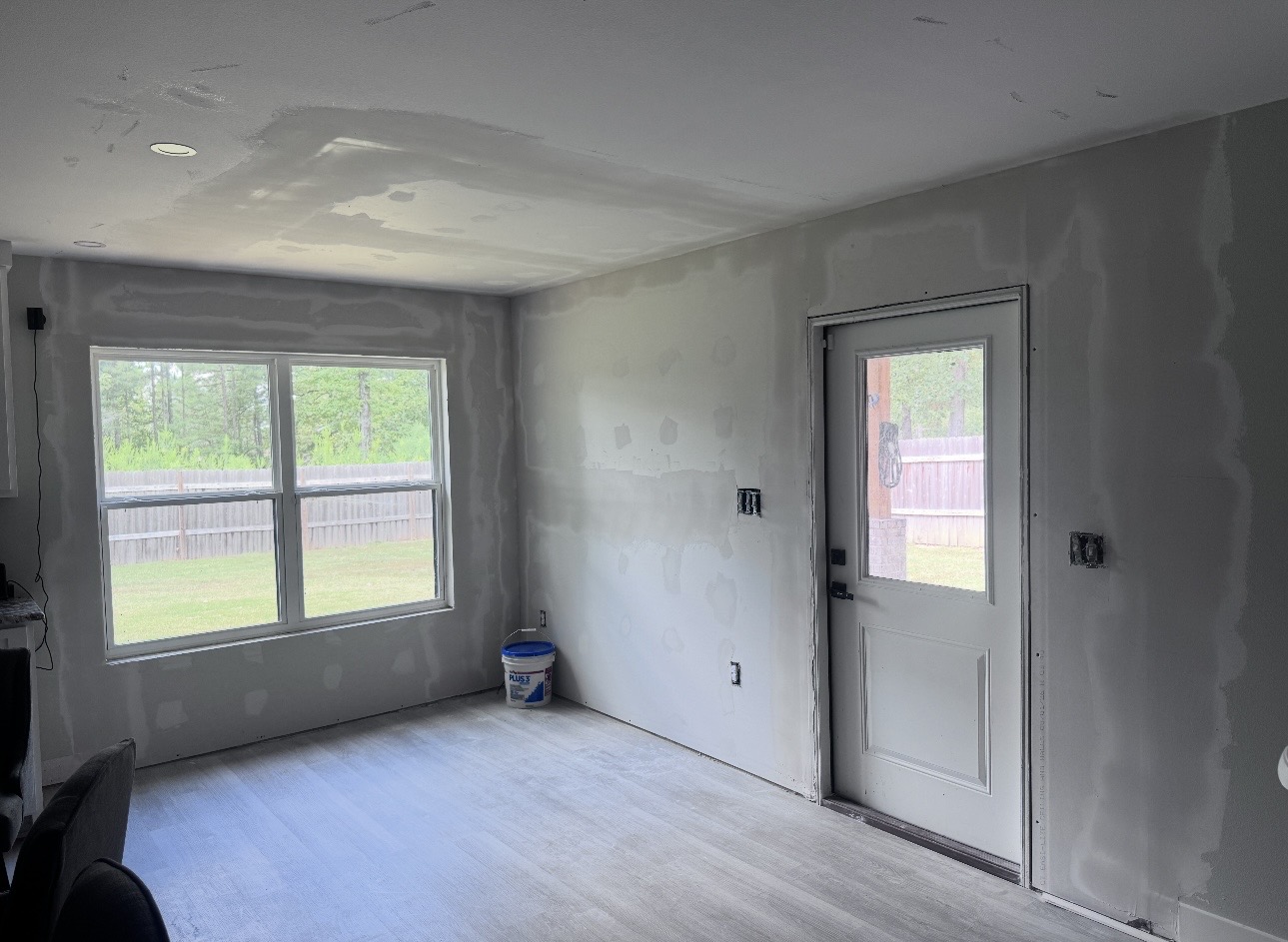
The homeowner received roofing installation and workmanship documentation at the end of the job. Our completion photos record the repairs at multiple stages, from exposed framing and decking through the finished roof and exterior.
Why homeowners choose Legacy Homes after storm damage
Tree removal and building restoration are related jobs, but they require different work. A recommendation from the tree contractor connected this homeowner with a team that could examine the house itself. Micah’s catastrophe-adjusting background helped him anticipate the detail needed for an adjuster to review a complex repair estimate, while our construction work carried the project through roof, exterior, and interior repairs.
When you hire Legacy Homes, you get a contractor who can inspect the connected damage, explain the proposed work in plain language, prepare an itemized Xactimate estimate when appropriate, share supporting documentation with the adjuster, and coordinate the trades needed to complete the authorized repairs. The insurer decides what the policy covers; we provide construction expertise and keep you informed about the repair scope.
Legacy Homes Roofing & Restoration handles storm-related roofing and repair work in Central Arkansas. If a tree has struck your home, document the damage when it is safe, prevent further exposure where possible, and arrange an inspection of the roof and the structure beneath it. We can assess the repair work and provide a clear written scope for your consideration.
Need an inspection after wind or tree damage in Central Arkansas? Contact Legacy Homes Roofing & Restoration to discuss your property.
Follow Legacy Homes on Facebook.
Legacy Homes Roofing & Restoration is a DBA of Emergency Mitigation Services LLC.